
Latest News
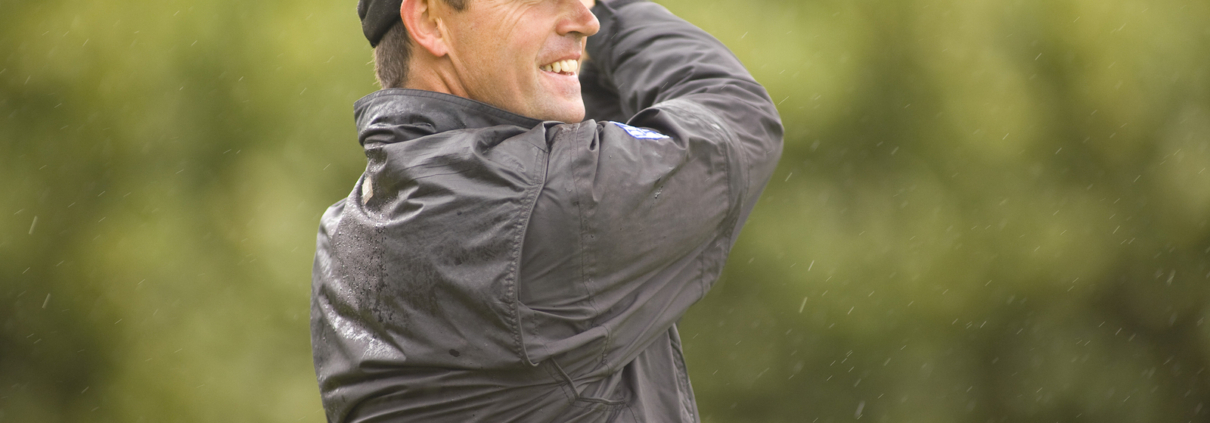
Padraig Harrington, 46 years young, came up just shy of his 16th career European Tour victory this past weekend, falling to Andrea Pavan by two strokes at the Czech Masters. In addition to his strong finish, Harrington cemented his legacy as a tinkerer. An elite tinkerer.
Harrington displayed a very interesting (feel free to supply your own adjective) takeaway at the event, in which he pauses just a moment after pulling his club away from the ball. It’s a unique begin to the swing, that’s for sure, but it’s even more than just a pause. Harrington is also lifting his left foot completely off the ground for just an instant.
The Irishman has been known to try different-than-usual things with his game — stepping through his finish was one example — both in his swing and on the driving range. The range is where we could have first seen this recent tinkering. Harrington was testing this latest strategy during a warm-up session at the PGA Championship earlier this month in St. Louis.
The thesis behind the move is to this point unclear, but what is clear is that Harrington is working through some type of swing thought on his takeaway. On the range, at least, he’s pushing one golf ball backward, away from the point of contact, pausing, then continuing with the rest of his swing. It’s mesmerizing. Based on this week’s results, it’s successful, too.
And the driver warm-up 🚀 pic.twitter.com/ByeycrMDPZ
— The European Tour (@EuropeanTour) August 26, 2018
Source: Golf.com
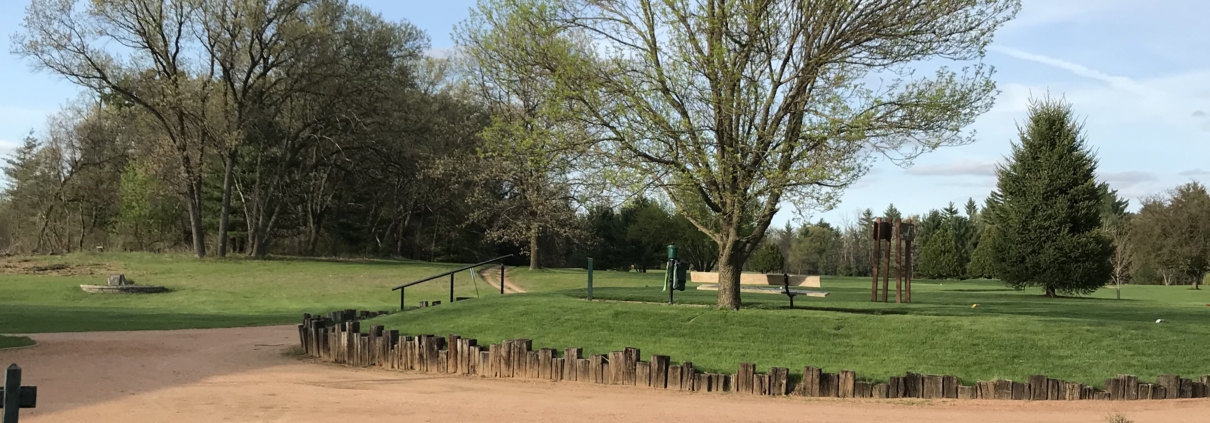
A-F Girls Basketball 9-Hole Golf Scramble
Sunday, August 19th
12 PM Registration | 1 PM shotgun start
$40 entry fee per player which includes 9 holes of golf, cart, and food after the event. We’ll also have Raffle Prizes and 50/50 Drawing!
To Register: Contact Loren Ebert at (608) 844-3980 or the Clubhouse at (608) 339-3814
Space limited to the first 18 teams to sign up!
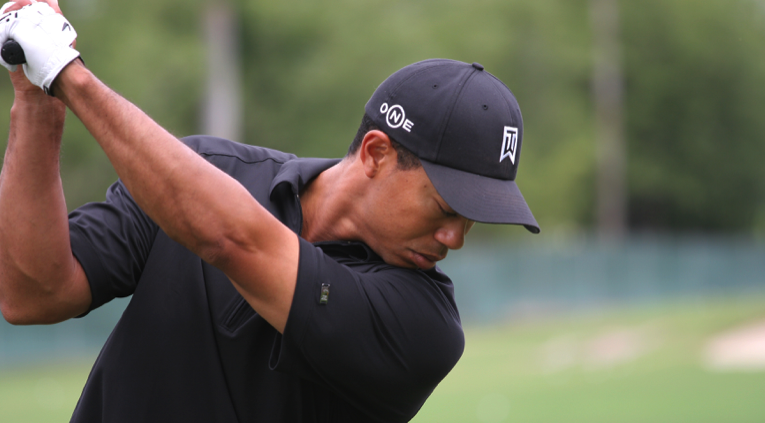
ST. LOUIS — You’re tempted to say he’s the hardest-working man in show business, except Tiger Woods isn’t in show business. That’s the root of his greatness and his greatest challenge. As a public being, he’d like to be judged, first and foremost, as he judges himself, as an athlete. But the world won’t stand for that. The modern elite athlete must also be an entertainer, a showman, a celebrity, a philanthropist. A role model. It’s too much.
On Sunday, we saw the version of the man that truly captures and inspires: Tiger Woods, athlete. “He shot 64 when he looked like he was shooting 74,” said his playing partner, Gary Woodland. “Only a great athlete can do that. He missed that five-footer for birdie on 1, got mad, stiffed it on 2 and made that.”
Woodland’s caddie, Brennan Little, was caddying for Mike Weir on Sunday at Medinah in 1999 when Weir was paired with Woods and Woods won his first PGA Championship. “That was intense,” Little said Sunday night. “This was more intense.”
That was then, Tiger Woods at the start of his professional career. This is now, Tiger Woods deep in the back nine of it. Then there would be more chances forever, until forever disappears.
These were his four scores: 70, 66, 66, 64. Only one player shot better, Brooks Koepka, who won by two over Woods and three over Adam Scott. Koepka is 28 and his body never aches. “If you’re working out every day, you’re not going to be sore,” he said Saturday night, 24 hours before the coronation ceremony as the (unofficial) best player in the world, the (unofficial) player of the year, the (unofficial) future first ballot Hall of Famer. Tiger Woods is 42 and his body always aches. He’s probably taking an ice bath right now. The things we do, to pursue the things we want. Woods wants a 15th major, his kids at the awards ceremony, a new last chapter. He may not realize—he may be too close to the action to know—that he is already at work on an exceptional third act. Act I of his playing career was called Talent + Work. Act II was called Obsession + Work. Act III, a work in progress, is called Trying. Who cannot relate to trying? It’s what we tell our kids and our better selves, right?
It seems fitting, that this piece of sporting near-magic happened where it did, in this great and proud city, or in its leafy, moist suburbs, anyhow. You know St. Louis: the Cardinals, the breweries, the Blues, the dwindling factories trying to hold on, the late, great Sporting News (print edition), union workers clinging to their cards, the reinvention as a tech-and-med town. You never saw bigger crowds following Woods, anywhere. St. Louis fans have a measure of patience you won’t see in New York or Chicago and Los Angeles. That’s why they love baseball so much. That’s why they were the sixth man in this fourth major. “It felt a little bit like a football atmosphere out there,” Woods’s caddie, Joe LaCava, said Sunday night. He’s a Giants fan himself. Woods’s team is the Raiders.
Eric McHugh, a St. Louis TV cameraman, worked the tournament on Sunday wearing a black Mizzou basketball hat. He’s covered everything there is to cover in St. Louis, and way beyond St. Louis. “I’ve covered games in the Coliseum, with 85,000 people there, hollering,” he said, referring to the Los Angeles football temple. “This was more than that.” Not in terms of numbers. No golf course, and Bellerive especially, can handle a crowd that size. If it was half of that, it would be huge. (The PGA of America did not release attendance figures.) McHugh was speaking as Woodland was, of intensity. “The crowd noise for Tiger was like a storm brewing. You’d be standing on the side of the fairway and he’d be walking up it and it was like a sound wave, building up, getting louder and louder.” There has never been another golfer who has created an atmosphere like that, who shakes life into the people who watch him, on a screen and especially in person. That’s because there’s never been a golfer with a life story anything like Tiger Woods’s life story. It’s easier to root for him now than ever before, because we can all see what he is: a man in recovery.
Woods did at Bellerive what he did last month at Carnoustie. Both times, he was nearly excellent. Both times he stirred memories of his former greatness. Both times, he showed his desire, intensity and anger, and his sense of humor, too. He showed—he proved—the very thing he has said for some years now: “Father Time is undefeated.” In the intense heat and humidity of the Show Me state in August, Woods needed two shirts a day. Greatness sweats. If you’ve ever seen Michael Jordan in action, or Bill Murray or American Pharoah, you know that. Woods played his second shot on 17 on Sunday, out of the muddy weeds beside a swollen creek, with beads of sweat on his cheeks, nose and neck. His towel should get a percentage.
Woods’s prime was far longer than you might realize. It began in 1991, when he won his first (of six) USGA amateur titles at age 15, and concluded in 2008, when he won his 14th professional major, at age 32. And here he was, 10 years later, on a long, soft course. Once, he owned the courses like this one, as he owned the American summer. Bring him to Valhalla, to Medinah, to Southern Hills—he knew what to do. He did what Brooks Koepka did here. Woods stomped on those courses, from early Thursday to late Sunday and with every club in his bag, most especially the driver (as needed) and the putter. Plus, the breaks went his way. The teetering putts fell. He played under a magic spell, in a cocoon of his own making. Now there are holes in it. They might be only pinholes, but air escapes. The 25-foot birdie putt on 11 sat practically on the paint. Back in the day, that ball fell. As it did at the 2005 Masters, on 16. As it did at the 2008 U.S. Open, on the 72nd hole. As it always did. Woods used to say, “You gotta get a little lucky.” It sounded arrogant because he was lucky and he was better than everybody. But he was also being accurate. Winners seem to always be a little lucky.
Woods will be on the Ryder Cup team, certainly as an assistant captain, almost certainly as one of Jim Furyk’s four captains picks. You can imagine him winning another PGA Tour event. Bellerive played much more like an ordinary Tour course, but with a far better field. It’s less easy to imagine him winning another major, not with the likes of Brooks Koepka and Dustin Johnson and Francesco Molinari and Justin Thomas flying around this world.
“The energy was incredible,” Woods said Sunday night. He was speaking of the fans’ energy. He could have been speaking of his own.
Source: Golf.com